

Why Upgrade from 2G GPS Locator to 4G GPS Tracker

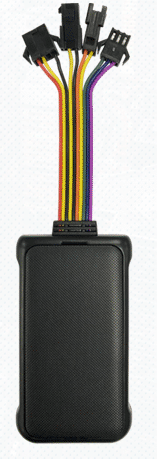
With the rapid evolution of global mobile networks, 2G services are being gradually phased out,
while 4G has become the foundation for vehicle communication, IoT connectivity, and smart tracking systems.
Upgrading from a 2G GPS locator to a 4G GPS Tracker is not only a technological advancement,
but also a strategic choice for ensuring reliability, global compatibility, and long-term efficiency.
1. Technical Performance: From Basic Connectivity to Real-Time Intelligence
The 4G GPS Tracker delivers ultra-fast data transmission speeds—dozens of times faster than 2G—
allowing for real-time tracking and seamless communication. Compared to the unstable 2G signal,
4G offers broader coverage, higher stability, and supports simultaneous transmission of
location, image, voice, and sensor data. In complex environments such as highways, ports, and urban tunnels,
4G ensures stable and low-latency connectivity essential for modern fleet and asset tracking.
2. Functional Expansion: From Positioning to Smart Monitoring
A modern 4G GPS Tracking Device integrates acceleration sensors, fuel consumption monitors, cameras,
and temperature modules, enabling multi-dimensional data collection and analysis.
It connects seamlessly with cloud management platforms for remote OTA upgrades, real-time analytics,
and intelligent dispatching. Additionally, 4G provides the bandwidth required for AI algorithms
that can detect abnormal driving behaviour, optimise logistics, and enhance safety management.
3. Global 4G Frequency Bands and Application Domains
Different regions use different LTE bands, and global compatibility is vital for a truly international GPS Tracker.
Below is an overview of major 4G frequency bands and their dominant applications worldwide.
| Region / Country | Main 4G Bands | Primary Application Fields | Implication for GPS Tracking Device |
| United States | Band 2, 4, 12 | Vehicle IoT, Logistics, Urban Security | 2G networks shut down; 4G GPS Trackers must support these LTE bands for reliability. |
| Europe (UK, EU) | Band 20, 3, 1, 7 | Smart Transport, Fleet Management | Low-frequency 800 MHz ensures deep indoor and rural coverage. |
| China / East Asia | Band 3, 8, 28 | Smart Mobility, Cold Chain Logistics | Multi-band support ensures adaptability to diverse Asian operators. |
| Australia / New Zealand | Band 3, 7, 28 | Mining, Agriculture, Long-Distance Fleet | Low-frequency 700 MHz offers better coverage for remote regions. |
| Middle East / Africa | Band 3, 8, 20 | Energy Transport, Security Tracking | Multi-band 4G devices enhance stability across emerging network infrastructures. |
4. Broader Application Scenarios
The 4G GPS Tracking Device is suited for various industries and environments:
– Fleet and logistics management with real-time route optimisation and driver monitoring.
– Personal safety for elderly, children, or pets with SOS alarms and live tracking.
– Asset and equipment management for construction, cold-chain transport, and cargo containers.
– Cross-border and remote tracking, leveraging multi-band global connectivity for seamless roaming.
5. Safety, Compliance and Sustainability
As multiple countries—including the United States, South Korea, and Australia—have already
retired 2G networks, using 4G GPS Trackers ensures continuous connectivity.
4G employs advanced encryption and authentication standards to protect sensitive data,
meeting both corporate and governmental security requirements.
6. Economic and Social Benefits
The 4G GPS Tracker reduces maintenance costs with remote firmware updates and automatic diagnostics.
It enhances operational efficiency, enabling companies to optimise fleet routes, reduce fuel consumption,
and improve delivery accuracy. Furthermore, 4G GPS data contributes to smart city ecosystems and
intelligent transport systems, promoting safer and more sustainable urban mobility.
7. Comparison Summary: 2G vs 4G GPS Tracker
| Dimension | 2G GPS Locator | GPS Tracking Device |
| Network Speed | Slow, high latency | High-speed, real-time |
| Coverage | Limited, shrinking due to shutdowns | Global multi-band compatibility |
| Functions | Basic tracking and SMS | Video, sensor, AI, cloud connectivity |
| Data Security | Basic encryption | Advanced authentication and encryption |
| Scenarios | Single-purpose | Fleet, IoT, cross-border tracking |
| Maintenance | Manual updates | Remote OTA and diagnostics |
8. Conclusion
Upgrading from a 2G GPS locator to a 4G GPS Tracker is more than a network evolution—it represents
a complete upgrade in reliability, intelligence, and global adaptability. With multi-band LTE support,
enhanced data security, and advanced functionality, 4G GPS Trackers are the cornerstone of future
smart transport, logistics, and IoT innovation.
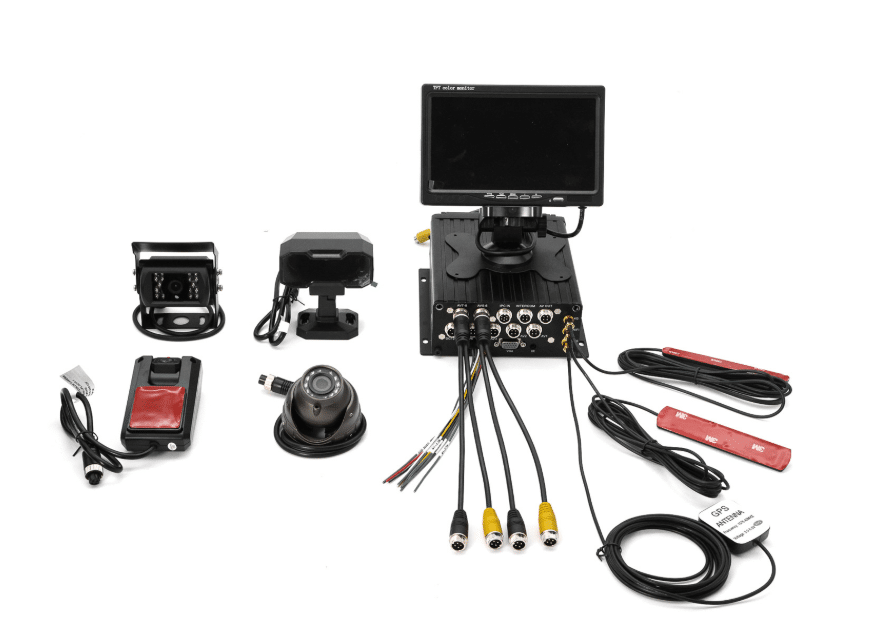
Please view our 4G IoT products. Click here.
GPS Tracker Positioning Demonstration System Login