


Livestock Cattle and Sheep GPS Tracker | Smart Ranch Tracking Solutions

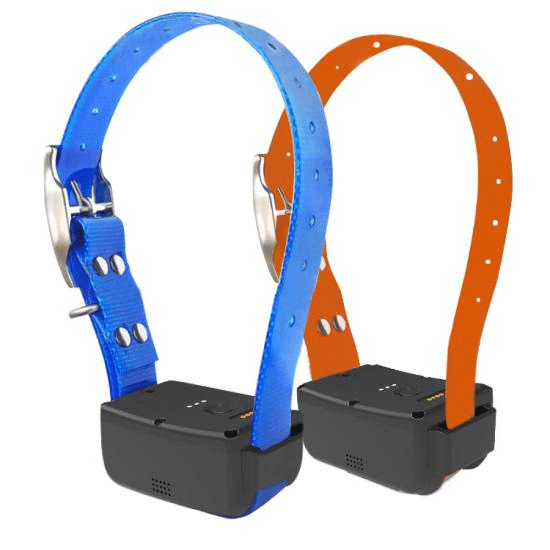
With the global livestock industry transitioning toward large-scale, digital, and precision farming, the cattle and sheep GPS tracker has gradually become a key infrastructure component of smart ranches and digital livestock systems. This paper systematically analyzes the practical application challenges of cattle and sheep GPS trackers in real-world farming scenarios, focusing on complex grazing environments, power consumption, network coverage, management value, and cost structure. Based on these challenges, a system-level product design solution for cattle and sheep GPS trackers is proposed. Through a comparative analysis of existing product types, this study further summarizes technological evolution trends and future development directions, providing theoretical reference and practical guidance for product development and industrial application of livestock GPS trackers.
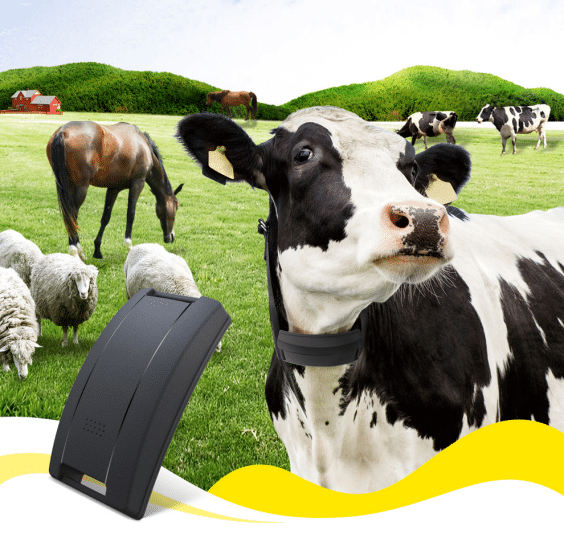
1. Research Background and Significance
Globally, ruminant livestock such as cattle and sheep are widely raised in grasslands, mountainous regions, semi-arid areas, and remote rural locations. Traditional livestock farming relies heavily on manual inspection and experience-based management, resulting in problems such as livestock loss, theft, delayed disease detection, and low grazing efficiency. With the advancement of Internet of Things (IoT), satellite positioning, and low-power communication technologies, the cattle and sheep GPS tracker has emerged as a critical entry point for livestock digitalization, supporting animal management, ranch security, and production decision-making.
From an industry perspective, cattle and sheep GPS trackers are no longer simple positioning devices but key nodes connecting livestock, ranches, management platforms, and data analytics systems. They play a vital role in improving production efficiency and risk control in modern livestock farming.
2. Key Application Challenges of Cattle and Sheep GPS Trackers
2.1 Complex Grazing Environments and Limited Network Coverage
Cattle and sheep GPS trackers are primarily deployed in open outdoor environments where cellular network coverage is often weak or unavailable. While satellite positioning technologies such as GPS and BeiDou enable accurate location acquisition, data transmission remains a major bottleneck due to unstable or nonexistent 2G, 4G, or NB-IoT coverage.
In large-scale grazing scenarios, a single communication technology struggles to balance coverage range, reliability, and power consumption, becoming a key barrier to scalable deployment.
2.2 Power Consumption and Battery Life Constraints
Cattle and sheep GPS trackers are typically worn as ear tags or collars, and battery replacement or recharging requires manually capturing animals, which is costly and labor-intensive. Therefore, ultra-low power consumption and long battery life are essential requirements.
However, many existing cattle GPS trackers prioritize real-time positioning, resulting in frequent data uploads and significantly reduced battery lifespan, making long-term, maintenance-free operation difficult.
2.3 Durability and Reliability Challenges
In real ranch environments, cattle and sheep GPS trackers must endure rain, snow, mud, extreme temperatures, and frequent physical impacts from animal behavior. Some products perform well in laboratory conditions but suffer from enclosure damage, antenna failure, or device detachment in actual use, compromising data continuity and system reliability.
2.4 Limited Management Value and Low Data Utilization
Many current cattle and sheep GPS trackers remain at the level of basic location display, providing only real-time positioning and historical tracks. They lack advanced data analytics and intelligent insights, limiting their ability to support effective ranch management decisions.
From a ranching perspective, farmers care more about abnormal behavior, health risks, danger zone entry, and grazing strategy optimization than raw location data.
2.5 Cost Structure and Scalability Challenges
Large ranches often manage hundreds or thousands of cattle and sheep. High device prices and ongoing platform service fees significantly increase operating costs, restricting the adoption of cattle and sheep GPS trackers among small and medium-sized ranches.
3. System-Level Product Design Solutions for Cattle and Sheep GPS Trackers
3.1 Multi-Mode Positioning and Communication Integration
Modern cattle and sheep GPS trackers should adopt multi-mode positioning and communication architectures, including:
-
GNSS positioning (GPS / BeiDou) for high accuracy
-
LBS-assisted positioning to enhance weak-signal availability
-
Scenario-based combinations of NB-IoT, LTE Cat-1, LoRa, or satellite communication
Intelligent switching between communication modes helps balance positioning accuracy, network accessibility, and power efficiency.
3.2 Low-Power Architecture and Long Battery Life Design
At both hardware and software levels, cattle and sheep GPS trackers should implement:
-
Event-triggered positioning and reporting
-
Deep sleep modes during inactivity
-
Automatic wake-up for abnormal activity or geofence violations
The design goal is to achieve 6–24 months of maintenance-free battery life without compromising core functionality.
3.3 High-Reliability Structure and Wearing Design
Cattle and sheep GPS trackers should meet the following structural requirements:
-
IP67 or IP68 waterproof and dustproof ratings
-
Low-temperature-resistant and impact-resistant materials
-
Anti-bite, anti-detachment wearing structures
Ear tag and collar-based designs can be flexibly selected based on livestock species, size, and application scenarios.
-
4. Comparison of Existing Cattle and Sheep GPS Tracker Products
4.1 Traditional GPS + Cellular Network Trackers
Advantages:
-
Mature technology
-
High positioning accuracy
-
Good real-time performance
Disadvantages:
-
High power consumption
-
Poor performance in remote areas
-
Gradual phase-out of 2G networks
-
High maintenance costs
4.2 NB-IoT / Cat-1 Cattle and Sheep GPS Trackers
Advantages:
-
Low power consumption
-
Wide network coverage
-
Suitable for large-scale deployment
Disadvantages:
-
Dependence on operator networks
-
Limited real-time capability
-
Restricted international roaming
4.3 LoRa-Based Livestock Tracking Systems
Advantages:
-
Ultra-low power consumption
-
No recurring data fees
-
Suitable for managing hundreds or thousands of animals
Disadvantages:
-
Requires private gateway deployment
-
Limited ultra-long-distance coverage
4.4 Satellite-Based Cattle and Sheep GPS Trackers
Advantages:
-
Independent of terrestrial networks
-
Extremely wide coverage
-
Suitable for remote and uninhabited grazing areas
Disadvantages:
-
High device and communication costs
-
Low data reporting frequency
-
Relatively higher power consumption
5. Conclusions and Future Development Trends
In summary, the cattle and sheep GPS tracker has become an essential technological tool for advancing livestock digitalization. Future development will focus on:
-
Deep integration of multiple positioning and communication technologies
-
Evolution from simple location tracking to behavior analysis and risk prediction
-
Lower power consumption and longer maintenance-free operation
-
Platform-based, data-driven, and scalable ranch management systems
-
Continuous cost reduction to enable widespread adoption
In the future, cattle and sheep GPS trackers will not merely serve as anti-loss devices but will become core infrastructure for digital livestock farming.
Product Monitoring Demonstration Platform: https://www.gps51.com/
-